
Searching Hyde County Criminal Dockets
For an online Hyde County docket search, go to the North Carolina eCourts Portal. Open Smart Search. Enter a case number if you have one. Or search by public party criteria, and use the Advanced Filtering Options, which include Criminal Actions. The live portal shows the current field labels and filters. Rely on the choices on screen rather than guessing at a charge category or status label. Smart Search returns a near-real-time Case Summary for public case types. It is also called the Register of Actions. That is handy for finding a Hyde County criminal case. It is not the official court record.
A full case number is the fastest route. Official Portal material lays out the Enterprise Justice pattern. It uses a two-digit year, case-type letters, a six-digit sequence, and a three-digit county identifier. Hyde County's identifier is 470. A name search can work when the spelling is exact. Portal guidance describes limited wildcard searches too. Say a broad query pulls 200 results. Narrow it with the location, case type, status, or filing-date controls instead of assuming the first hit is your match.
- Open Smart Search in the eCourts Portal and enter the best available case number or public name criterion.
- Use Criminal Actions under Advanced Filtering Options when the result set needs narrowing.
- Open the matching public Case Summary and read Case Information and Assignment Information before drawing conclusions from its event list.
- Review Case Events, Hearings, Dispositions, and Financial Information only when those sections appear.
- Use the Hyde County Clerk or the public terminal for a clerk-held file, copy, or certified record.
Note: Registering on the Portal lets Hyde County users save My Cases. It does not unlock restricted case types or nonpublic information.
Hyde County Felony Dockets
Hyde County sits in Superior Court District 2. Under the state court structure, felony trials happen in Superior Court. The Hyde County Clerk of Superior Court is the local route to the county file and copies. There is no separate Hyde County felony database. The official Superior Court description points back to the statewide Portal and county clerk setup. So does the Hyde County location page. When populated, the Assignment Information in a public Case Summary can reveal the court level.
North Carolina's court-structure overview explains the unified trial-court system that Hyde County belongs to.
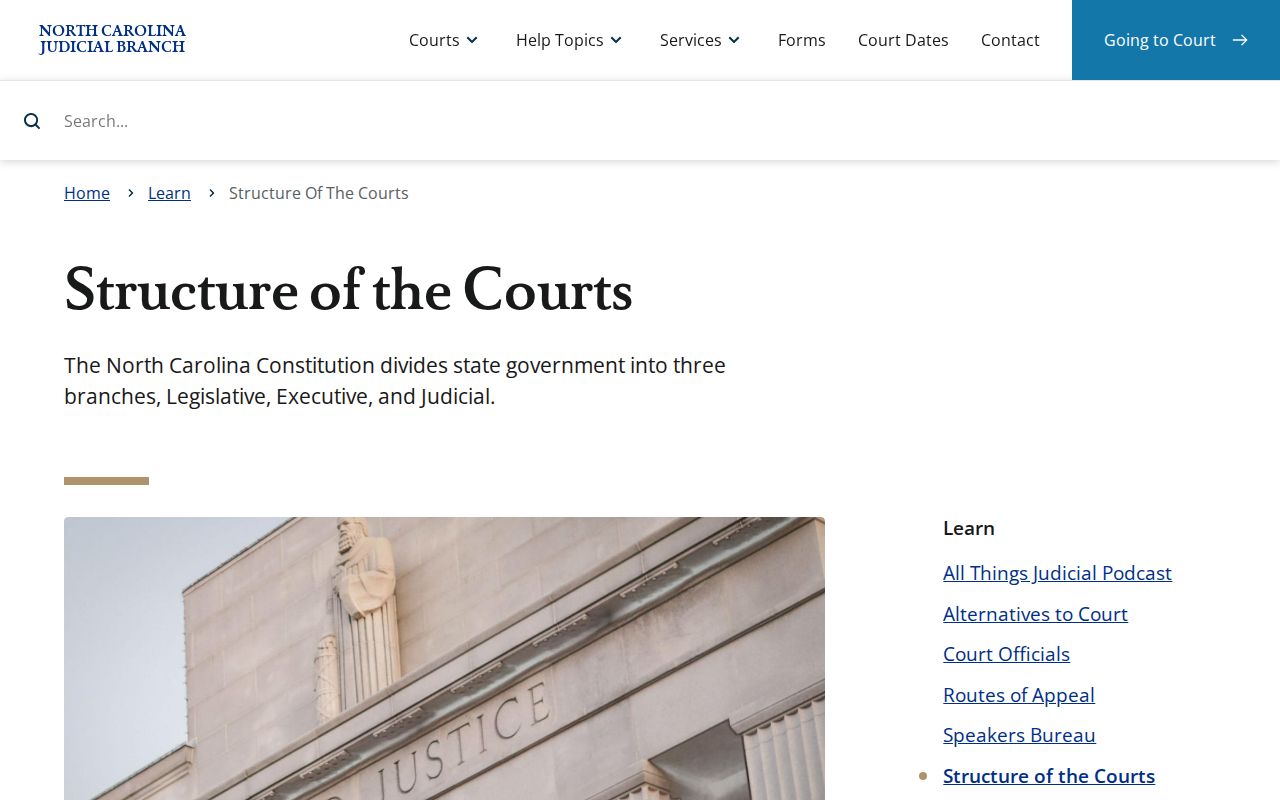
The court split matters when you read a Hyde County criminal docket. A Superior Court trial track is not the same thing as the earlier Hyde County District Court activity that can show up in one matter's history.
Inside a Hyde County Criminal Docket
A Hyde County Case Summary comes in layers. Not every case fills every field or document image. Begin with the identifying and assignment fields, then work through Case Events in date order. Hearings can list scheduled or past court events. Dispositions may hold outcome information when it exists. Financial Information is conditional. Official Portal guidance is clear that Smart Search only displays sections when information is present, so a missing financial block means nothing more than that. Do not read an absent section as proof that no related activity ever occurred.
| Case identifier | Hyde County Case Information supplies the basic case data. The documented Hyde format pattern is YY[case-type]######-470; read actual case-type letters from the live result. |
|---|---|
| Court assignment | Assignment Information may identify the Hyde County District or Superior Court path where populated. |
| Parties | Party Information lists public Hyde County case roles and identities subject to access limits. Victims are not returned in searches. |
| Case Events | The Hyde County Register of Actions chronology records case activity as entered in the case-management system. |
| Hearings and outcome | Hyde County Hearings, Dispositions, and applicable Financial Information add detail only when the public summary contains those sections. |
The court publishes no official Hyde County code glossary. When an abbreviation puzzles you, read the full entry or order and confirm with the Hyde County clerk rather than trusting a generic code list.
Hyde County Felonies Start in District
A Hyde County felony can move through District Court. That can happen before it ever reaches a Superior Court trial track. North Carolina criminal guidance describes District Court preliminary work. It also covers probable-cause or transfer indicators ahead of the felony trial level. One Hyde County criminal matter can look scattered. That happens if you check a single date or a single setting. Read the Case Events chronology first. Then compare Assignment Information against the newest hearing.
Hyde County District Court also handles misdemeanors and infractions, traffic matters included. A District Court misdemeanor conviction may be appealed for a fresh Superior Court trial. That later activity does not erase the earlier Hyde County District Court docket entry. The court path simply changed. The state criminal cases explanation covers this division of work best.
The state criminal-case explanation supplies the court-level context for reading Hyde County entries without mistaking any single event label for a final outcome.
How a Criminal Case Moves
No two Hyde County criminal cases follow every step in the same order. The Portal publishes no fixed local event-code sequence. Even so, the state framework helps a reader make sense of a public chronology. Early initiation or preliminary activity may give way to District Court work, then a probable-cause or transfer step in a felony matter, later plea or trial activity, and an outcome entry. A misdemeanor appeal earns a brand-new Superior Court trial. It reviews no District Court transcript.
Docket flow: Filing → Arraignment → Pretrial → Plea or Trial → Disposition → Sentencing
Read it as a guide. It is not a promise that every label will appear in a Hyde County Case Summary. A case event only shows recorded activity. It is never a final result by itself.
Reading Hyde County Criminal Events
Case Events form the timeline inside the Hyde County Register of Actions. Sequence is their whole value. Read each setting, filing, or transfer entry with its date and with whatever follows it. The end of the list is not the result. Short labels can be cryptic. No published Hyde County list spells out the labels. That means the event wording, charge fields, bond entries, plea labels, and sentencing codes used in Hyde County criminal dockets. That gap matters most when an unfamiliar label shows up.
- Case Summary
- Portal's near-real-time public summary of available Hyde County case information.
- Register of Actions
- The Portal name for Hyde County timeline-style docket information in a Case Summary.
- Hearing
- A current or historical Hyde County court event. Search Hearings is the separate tool for current location and time.
- Disposition
- Recorded Hyde County outcome or status information for a resolved issue or case when the public summary shows it.
For the current Hyde County schedule, search the hearing tool. Do not rely on a historical entry alone. The Portal display is not the filed document. For the underlying paper or a certified order, the proper route is the Hyde County Clerk.
Courts That Hold Criminal Dockets
Misdemeanors and infractions travel the District Court side of the Hyde County criminal docket. Traffic matters are included. Superior Court holds felony trials plus misdemeanor and infraction appeals. Both sit in one state-managed system. Hyde County runs a single courthouse route for files and copies. That route runs through the Clerk of Superior Court. No separate municipal criminal database or felony-clerk portal exists to search.
Hyde County Clerk of Superior Court
For court files, copies, certification, and local routing, contact the clerk at the Hyde County Courthouse, 40 Oyster Creek Road, Swan Quarter, NC 27885.
(252) 926-4700
The official Hyde County court page ties the courthouse to Portal, calendar, and court services. Clerk offices also offer public self-service terminals. Under statewide guidance, those terminals search criminal cases by name, case number, victim, or witness. Terminal access questions go to the clerk.
Hyde County Criminal Hearings
Search Hearings is the current-calendar piece of Portal for a Hyde County setting. Filters include case number, party name, attorney information, judicial officer, courtroom, and a date range. The result gives current location and time. The format is the catch. Search Hearings does not say whether a hearing is virtual or in person. A separate Portal link may carry virtual appearance details. Still, the search result is not a Hyde County format confirmation.
Phone calls settle format questions faster. For a District Court criminal setting, call the District Court Judges office at (252) 940-4012. For a Superior Court setting, call the Superior Court Judges office at (252) 940-4016. Questions about a clerk-held case record go to Hyde County Clerk at (252) 926-4700. Attendance details are a different matter. The Hyde County contact directory lists these local lines.
Note: A past Hyde County hearing stays in the case history. Verify the newest setting whenever time or location matters.
Hyde County Criminal Contacts
Pick your contact by the question. The Hyde County clerk owns the county file, copies, and records routing. The judges' offices handle settings. District and Superior each confirm their own calendars. That split matters after a Portal search shows a time and place but leaves the format unclear. It also stops you from treating a statewide result as a certified Hyde County record.
Hyde County sits in the Second Judicial District, which appears in the Holistic Hope Mental Health Diversion Program announcement. The release covers mental-health support, counseling, wellness practices, and community resources. It names no Hyde County specialty docket number, courtroom, eligibility form, or schedule. So a participant's case still runs through the ordinary Portal and clerk-access rules. Never assume a program label on the docket.
The official program release gives useful Second District context. It creates no separate Hyde County criminal calendar.
The program details sit at the district level. A Hyde County criminal docket stays a case-specific public record, subject to the ordinary access limits.
Sealed Dockets and Public Access
North Carolina General Statute 7A-109 makes clerks maintain court files, dockets, and indexes. Public inspection applies wherever law allows. The Clerk of Superior Court keeps Hyde County's local record. The Portal Case Summary is a public reference view. It is not the official record. For the underlying file, a certified copy, or an old paper item, contact Hyde County Clerk. A search needing local help can also use the clerk-office terminal. The Judicial Branch public-record request route serves existing administrative records. It does not place NCAOC over Hyde County case documents.
Key Rules:
G.S. 7A-109 directs clerks to keep prescribed files, dockets, and indexes and allows public inspection unless access is barred by law.
G.S. 7B-3000 withholds juvenile records from public inspection except for controlled authorized access.
G.S. 15A-151 keeps expunged criminal records confidential, subject to limited statutory disclosure rules.
A missing Hyde County public result can mean several things. The search criteria may simply be off. The record may be old or restricted. It may be tied to an expunction. It may also be a case type outside ordinary public access. Registering an account unlocks nothing extra. For a mixed record, the state can redact or separate confidential portions rather than release the whole item. Ask Hyde County Clerk which rule or order controls the record. Work with that answer instead of around a restriction.